In case anyone reading this doesn’t know, at the start of 2026 I quit my job in order to move to Uralsk in Kazakhstan with my partner – Aiko – who I met whilst she was studying in the UK on a scholarship. I am registered for a remote masters degree in Data Science, but that doesn’t start until April, and so I have the first three months free to explore and acclimatise myself here.
Acclimatise is definitely the right verb – because before I got off the plane, most of my thoughts were about what -30°C temperature would possibly feel like (which is what the weather was predicted to be when we arrived). I wracked my brain for the coldest temperature I had previously experienced and, not remembering ever having gone on a holiday anywhere especially cold, I figured my coldest experience was probably had in the UK, and it can’t have been any lower than -10°C. I struggled fruitlessly to multiply the ‘coldest weather I’ve ever felt’ by three in my imagination, and concluded that I couldn’t possibly know how it would feel without simply experiencing it.
Happily, and somewhat surprisingly, I have so far found the weather pretty comfortable. Obviously this is because I have always been wrapped in many layers – but still, the trepidation I felt that most of my new winter clothing said plain phrases like ‘made of wool’ rather than much more reassuring phrases like ‘arctic-ready’ or ‘technical clothing’ has proven unfounded. I’ve even gone for a half hour walk without wearing my hat after I left it in Aiko’s car – although it must be said that this was in more ‘normal’ winter temperatures (i.e. between -5°C to -15°C) and that -25°C and below are rarer conditions.
Local Geography and Architecture
Ultimately, Aiko and I will be living in her apartment on the north side of Uralsk – however for the first week, we were staying at her mum’s house In the Zachagansk ‘Microdisctrict’ (think suburb, but arguably more self-contained). It is about a 20 minute drive from here into Uralsk city centre.
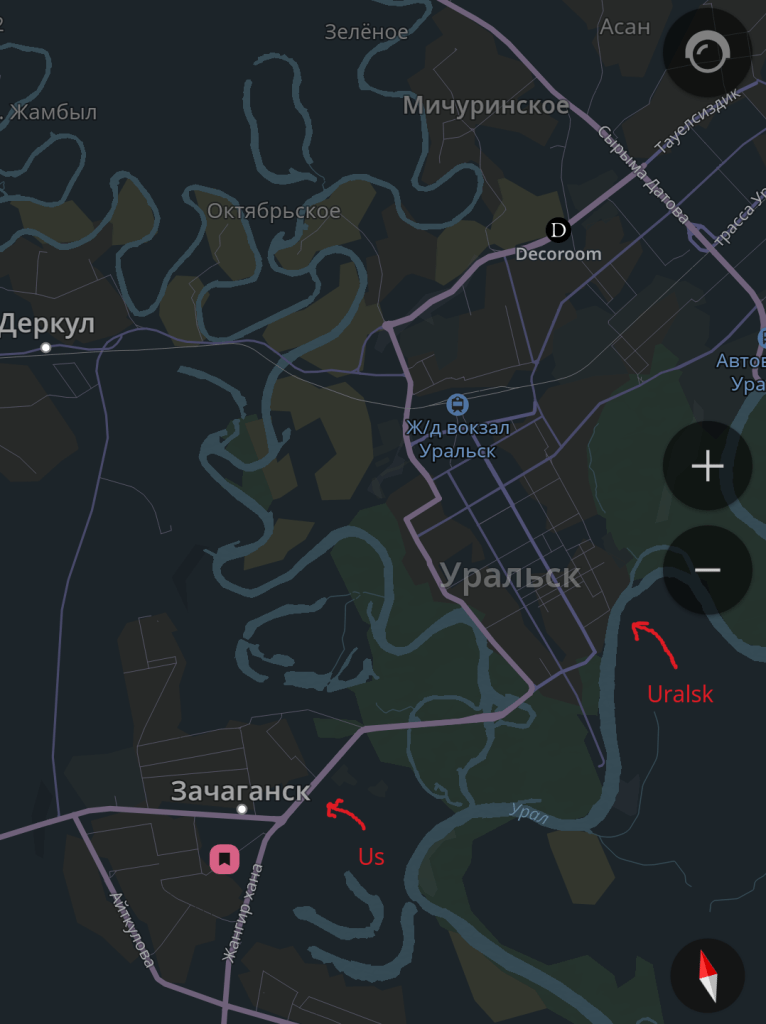
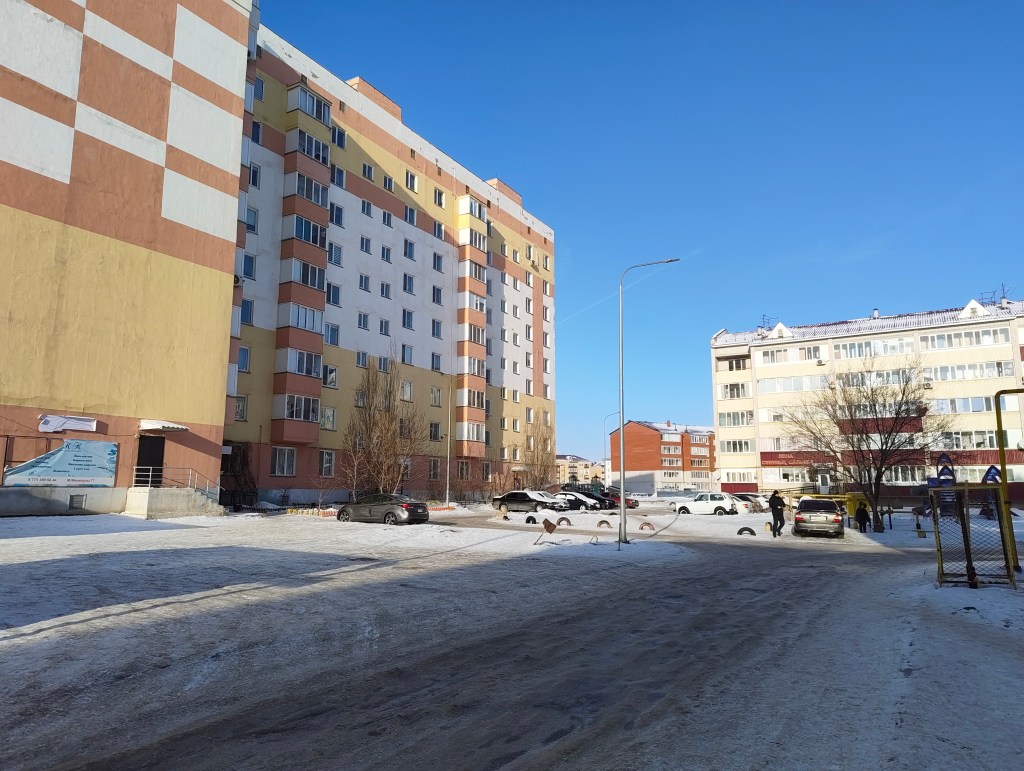
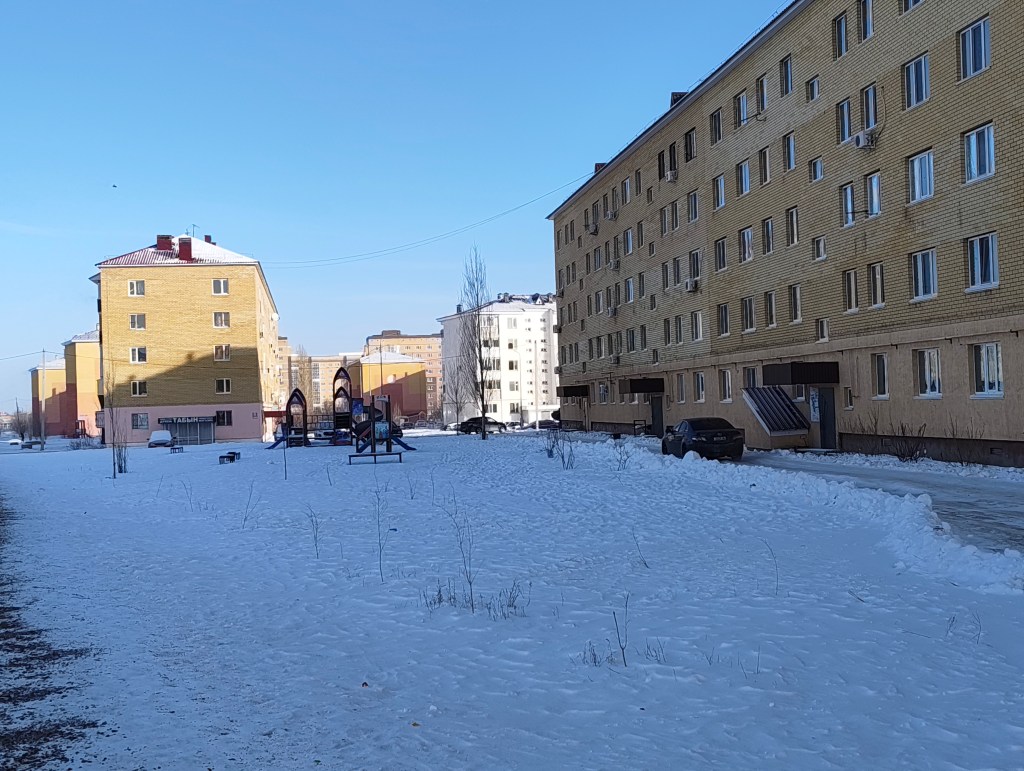
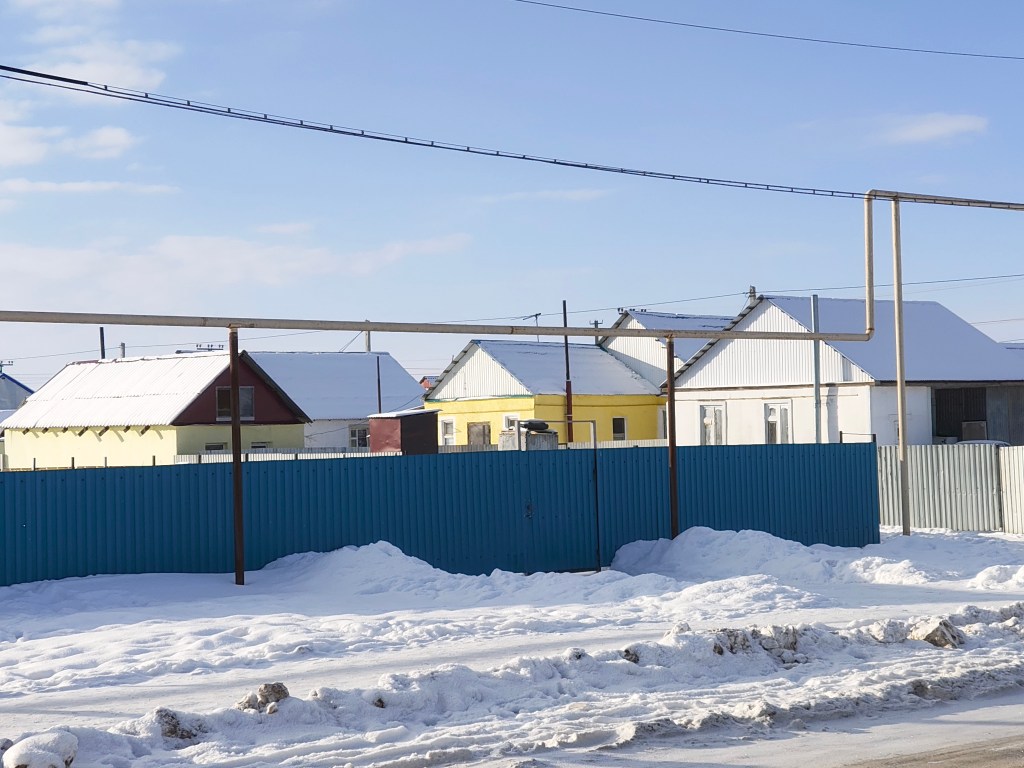
In my brief trips out, I have found it a fairly pleasant and safe neighbourhood to walk around in, albeit without much to actually do here. At least half of the microdistrict is made up of apartment blocks that my keen architectural eye would describe as ‘vaguely post-soviet, but painted pretty colours and sometimes made out of brick’, and the rest (including Aiko’s mum’s house) are bungalows with corrugated metal roofs, divided fairly evenly by corrugated metal fences into ~10-15m2 plots of land. Since we never use corrugated metal for homes in the UK, I did look it up and – as expected – it is supposed to be a very sensible material for building roofs (particularly in harsh weather) but I have to admit, the fences do look a bit industrial and uninviting to me!
Uralsk itself had some very attractive places but, as I haven’t got enough pictures of it yet, I will save my impressions of that for part 2.
Domestics
Aiko went back to work midweek, and so was it just me, her mum – who earns a living by cooking and delivering lunches every workday – and her mum’s cooking assistant/neighbour in the house during the day. We were successfully able to communicate through a mix of my extremely limited Russian phrases, frantic hand signals and a Speech-Speech translation app called DeepL. Obviously we did not exchange many complex thoughts, but I think both of us regarded the communication challenge as an amusing novelty. Our worst communication breakdown resulted in my accidentally agreeing to a mid-afternoon Borshch after a very large lunch, since I foolishly tried to express the sentiment that I was ‘looking forward to Borshch for dinner later’ – a breakdown which greatly amused Aiko. It is far from a coincidence that the first phrase I’ve learnt in Kazakh is ‘No, I’m full, thanks!’.
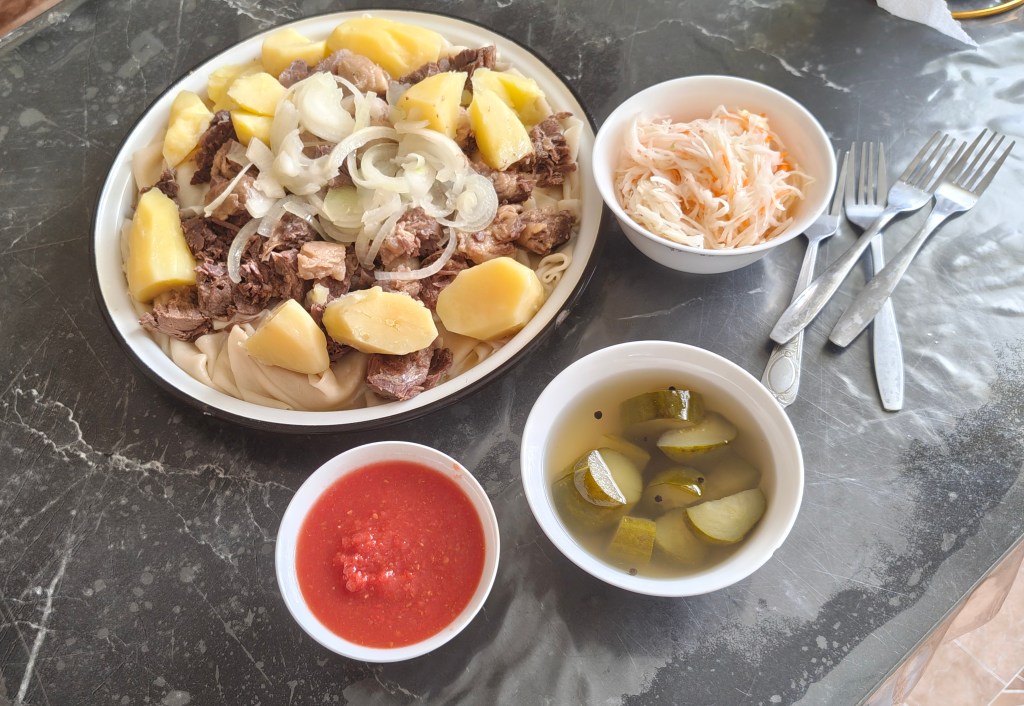
Still, the Borshch was delicious – as has been all of the food so far. We’ve rapidly rattled through all of my anticipated classics: Beshbarmak, Borshch, Manti (dumplings), Plov (fried rice), Korean salads and I can quite easily see myself living off this fare for a good long while. The only thing that will take some adjustment is that they tend to leave a lot of fat on their meat, but this is something I can probably get used to.
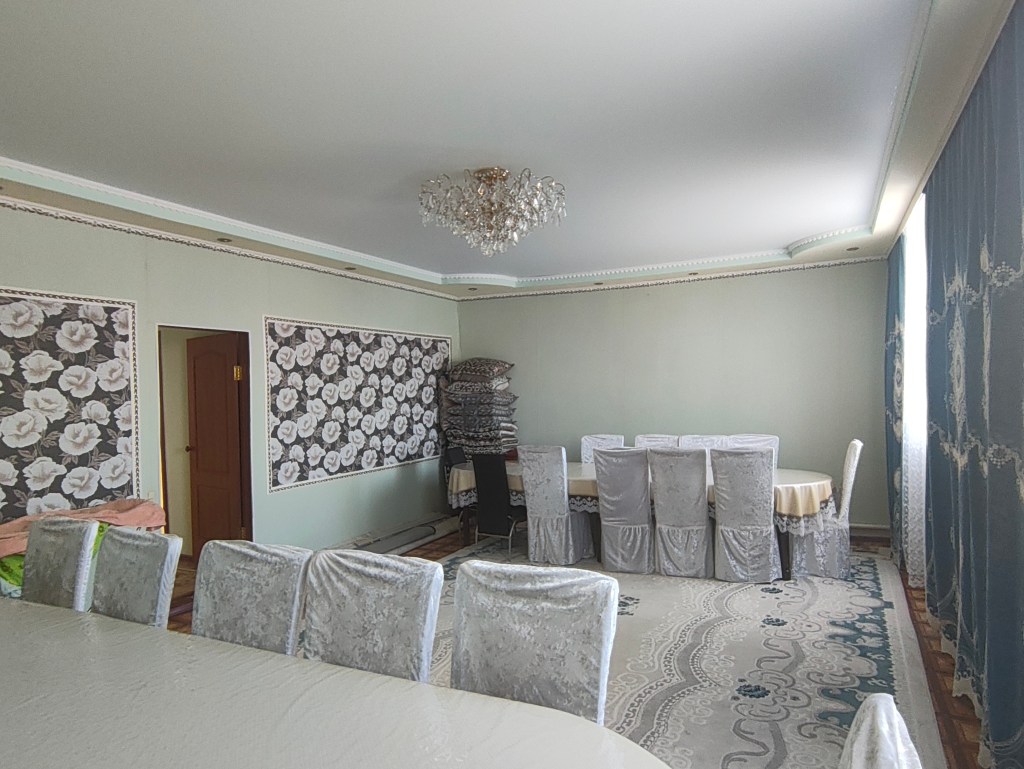
The biggest difference about the inside of the home – which admittedly I have too small a sample size for to make any sweeping generalisations from – Is that everything seems much more oriented towards hosting and social occasions than towards daily comforts. There are fewer separate rooms, but the rooms themselves are quite big and sparsely furnished. One surprising example of this is that there are no beds: Aiko’s mum sleeps on the sofa, and Aiko and I are sleeping on two mats picked out from a plentiful stack. The front room looks like this:
That’s it for now – Stay tuned for Part 2, in which I will discuss: Uralsk City center, my burgeoning social scene, and last but not least, the DIY journey of furnishing our completely empty flat – with an exciting section in which we attempt to install skirting boards!
 Max Goldsworthy
Leave a comment